
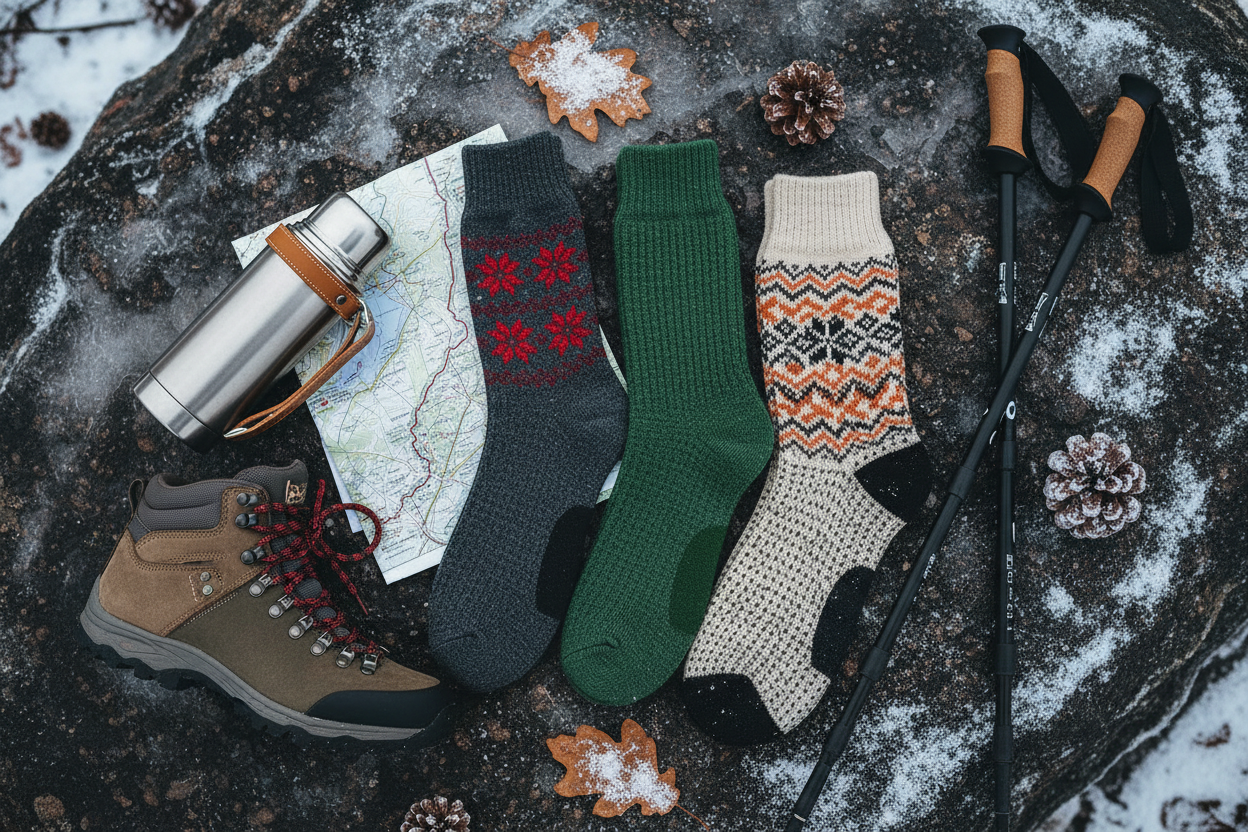
Cold weather camping across the United States can be an unforgettable experience, from snowy mountain trails to chilly forest campsites. However, staying warm requires the right gear, and one essential item that is often overlooked is your choice of camping socks. The wrong socks can leave your feet cold and damp, while the right ones keep you warm, dry, and comfortable throughout your trip.
This guide will help you choose the best socks for camping in cold weather conditions across the USA.
Why Choosing the Right Socks Matters in Cold Weather
When temperatures drop, your feet are especially vulnerable to the cold. Poor quality hiking socks can trap moisture and reduce insulation, making your outdoor experience uncomfortable.
High quality camping socks help:
-
Retain warmth in freezing temperatures
-
Wick moisture away from your skin
-
Provide cushioning for long hikes
-
Prevent blisters and irritation
-
Keep your feet comfortable inside winter boots
Best Materials for Cold Weather Camping Socks
The material of your socks plays a major role in how well they perform in cold conditions.
Merino Wool
Merino wool is widely considered the best material for cold weather camping. It naturally insulates your feet and keeps them warm even when slightly damp.
Benefits include:
-
Excellent temperature regulation
-
Moisture wicking capabilities
-
Odor resistance for extended trips
-
Soft and comfortable feel
Synthetic Blends
Synthetic materials like polyester and nylon are often blended with wool to improve durability and drying time.
They provide:
-
Faster drying performance
-
Better shape retention
-
Increased durability for rugged use
Avoid Cotton
Cotton absorbs moisture and loses its ability to insulate when wet. It is not suitable for cold weather camping.
Should You Use Waterproof Socks for Camping
Waterproof socks for camping are especially useful in wet and snowy environments. In many parts of the USA, winter conditions can include slush, melting snow, or damp trails, making waterproof protection essential.
Consider using waterproof socks when:
-
Camping in snow or slushy terrain
-
Crossing streams or wet areas
-
Spending extended time outdoors in damp conditions
They help keep your feet dry, which is critical for maintaining warmth.
Key Features to Look For
When choosing the best socks for camping, look for these important features:
-
Thickness and cushioning
Thicker socks provide better insulation but should still fit comfortably inside your boots -
Moisture control
Socks should pull sweat away from your skin to keep your feet dry -
Proper fit
A snug fit helps prevent bunching and reduces blisters -
Reinforced heel and toe
Adds durability for long term use -
Breathability
Helps regulate temperature even in cold weather
Layering Socks for Extreme Cold
In very cold regions of the USA, layering your camping socks can provide extra warmth.
A simple layering system includes:
-
A thin liner sock to wick moisture
-
A thicker wool sock for insulation
This combination keeps your feet dry and warm. Make sure your boots have enough room so circulation is not restricted.
How Many Pairs Should You Pack
Packing enough hiking socks is essential for comfort during your trip.
A good guideline:
-
One pair for daytime use
-
One dry pair for sleeping
-
One extra backup pair
Wearing dry socks at night helps your body stay warm and improves sleep quality.
Tips to Keep Your Feet Warm While Camping
Even the best camping socks need proper use to perform well. Follow these tips:
-
Keep one pair of socks completely dry for sleeping
-
Avoid tight socks that restrict circulation
-
Let your socks air out whenever possible
-
Store socks inside your sleeping bag overnight to keep them warm
-
Wear insulated, properly fitted boots
Final Thoughts
Choosing the right camping socks for cold weather in the USA depends on selecting the right materials, ensuring a proper fit, and using layering when needed. Merino wool hiking socks are a top choice for warmth and comfort, while waterproof socks for camping provide added protection in wet conditions.
A good pair of socks can make a significant difference in your outdoor experience. Warm and dry feet allow you to fully enjoy your winter adventure without discomfort.
Before heading out on your next camping trip, make sure your socks are ready to handle the cold just as well as the rest of your gear.

Leave a comment
All comments are moderated before being published.
This site is protected by hCaptcha and the hCaptcha Privacy Policy and Terms of Service apply.