
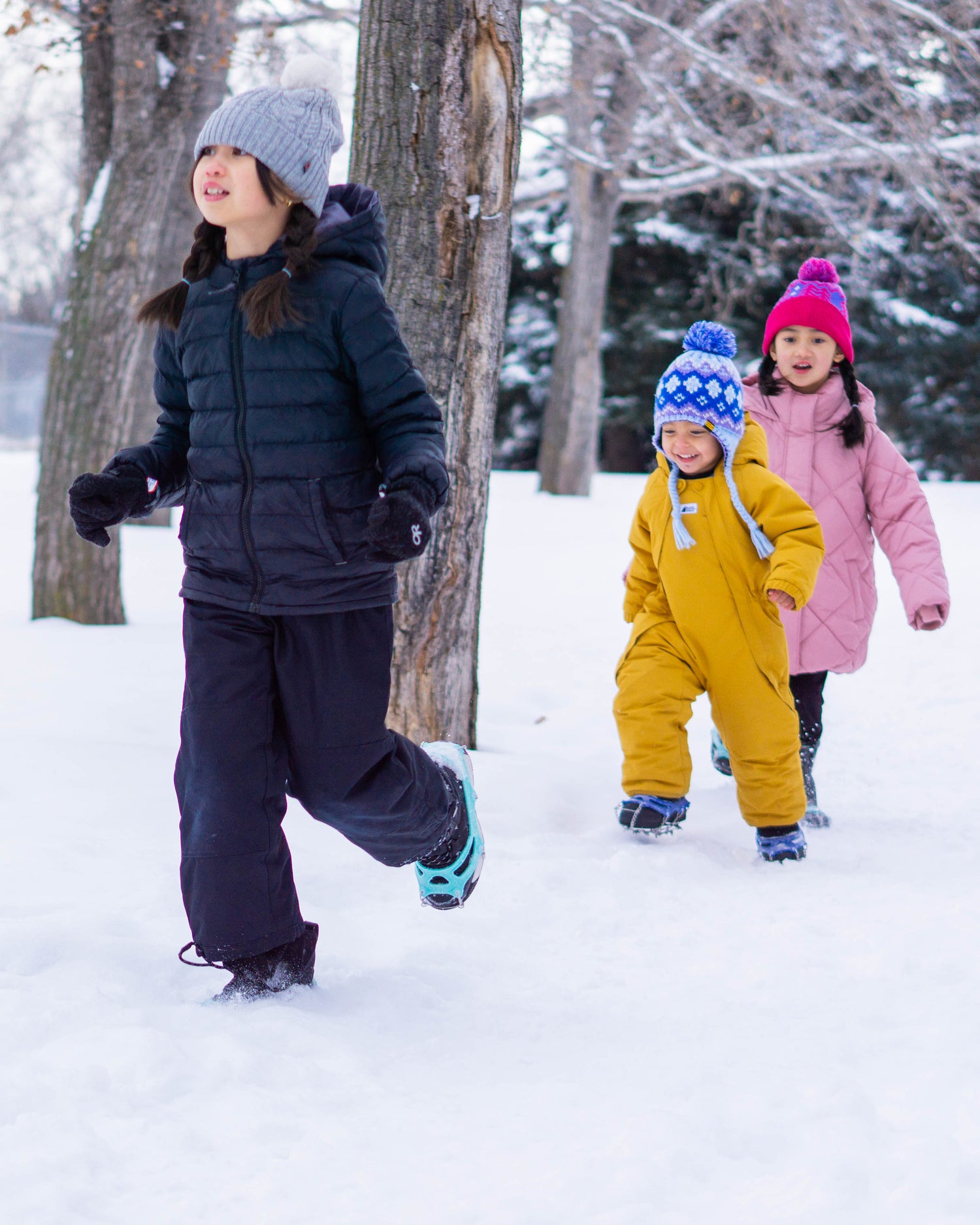
It’s that heart-stopping moment every parent dreads: seeing your child’s feet suddenly fly out from under them on a patch of unseen ice. Even the best winter boots can’t handle a slick driveway, and worrying about falls can take the fun out of a simple walk. There is, however, a simple way to turn that fear into confidence and give their boots a superhero-like grip.
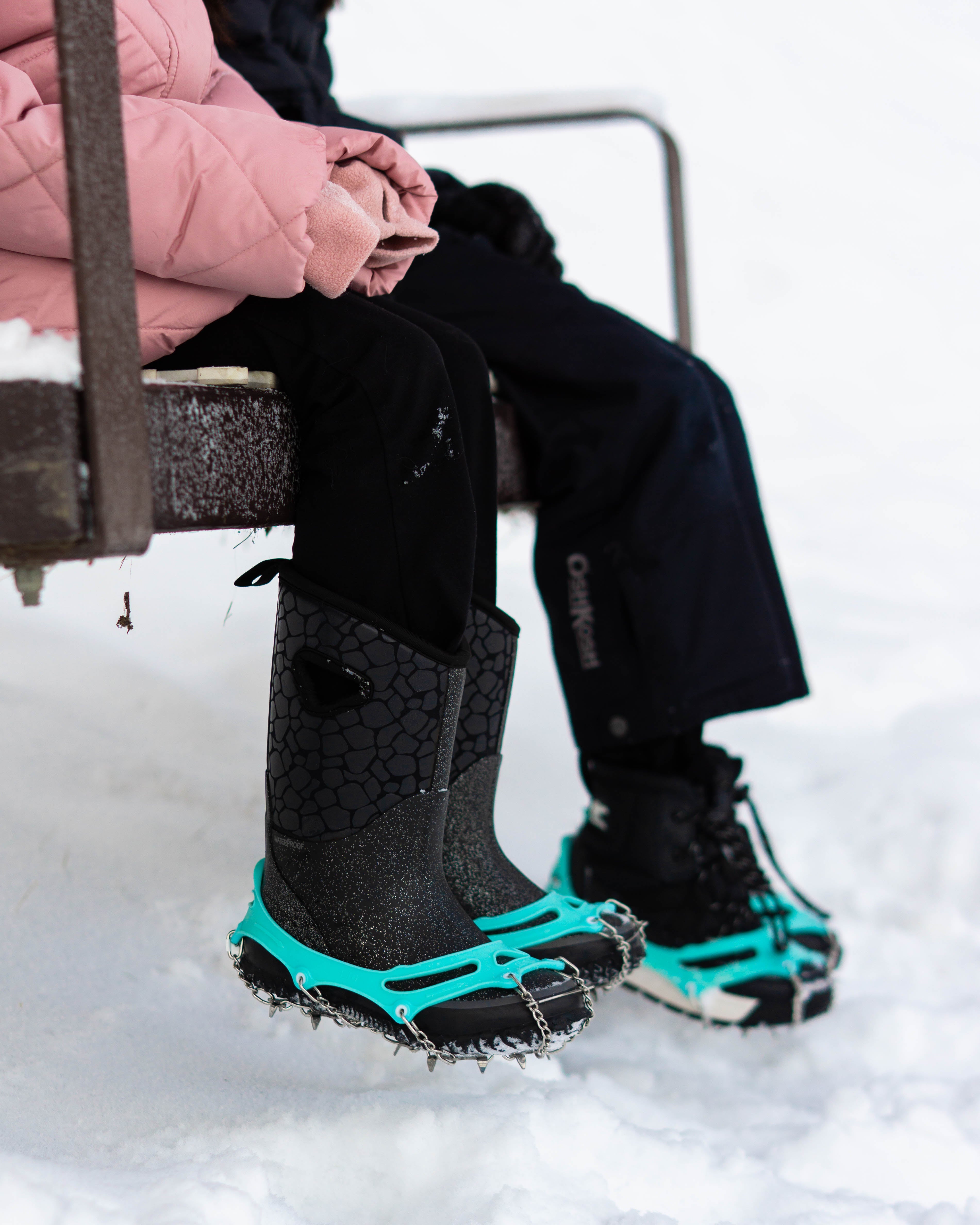
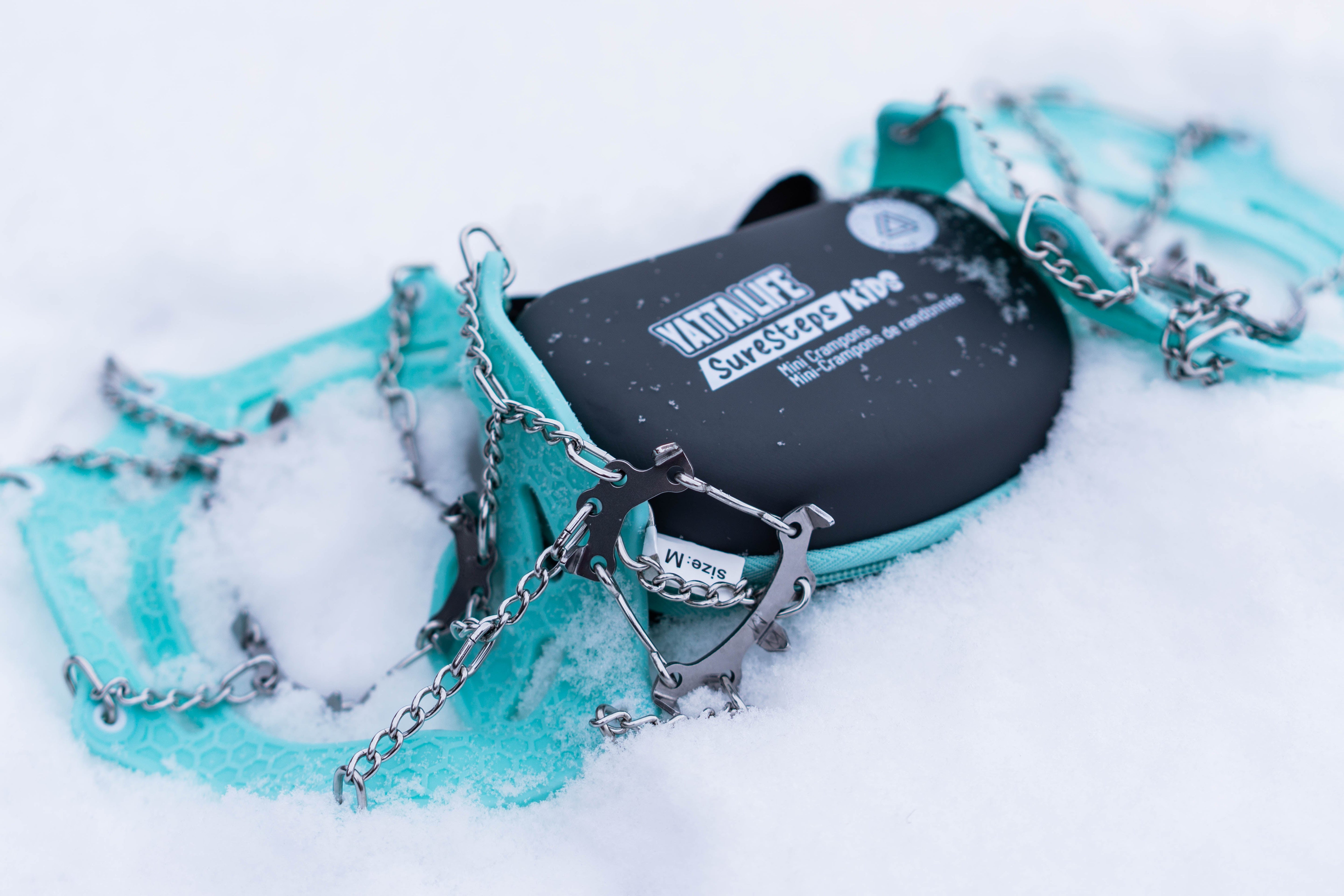
Meet the solution: slip-on ice cleats for kids' boots. Think of them as snow tires for footwear—a simple accessory that transforms any boot for winter safety. These clever devices feature a stretchy rubber frame that pulls on easily over their existing shoes. Underneath, steel spikes or coils bite into the ice, providing the stability that even deep boot treads can't guarantee on their own.
These devices go by many names, which can be confusing. Whether you search for children's shoe grips for icy pavement, traction spikes, or even wonder what are microspikes, you're generally looking for the same type of product. This guide will help clarify the options to keep your child steady and secure all winter long.
Spikes vs. Coils: Which Type of Ice Grip is Right for Your Child?
Once you decide your child needs extra traction, you’ll quickly notice two main styles: some with aggressive-looking spikes and others with wound-up steel coils. They look different because they do very different jobs, and choosing the right one depends entirely on where your child will be walking.
Traction aids with spikes are the heavy-duty option. Like tiny studs on a snow tire, they are built to bite directly into slick, hard ice. This design makes these youth ice cleats the best choice for maximum, non-slip grip on frozen driveways, icy trails during a family hike, or navigating paths covered in packed-down snow. If your primary concern is preventing falls on pure ice, spikes offer the most secure footing.
On the other hand, coil-based grips are designed for flexibility and everyday walking. Instead of sharp points, they use steel coils that provide grip across the entire foot. Because they don’t dig in as aggressively, they are more comfortable for walking over mixed surfaces, like a sidewalk that alternates between patches of ice and stretches of bare pavement. They are a popular choice for daily walks to school or the bus stop where conditions can change from one block to the next.
To make the choice simple, here’s a quick guide:
-
SPIKES: Best for pure ice, packed snow trails, and situations where grip is the #1 priority.
-
COILS: Best for mixed surfaces with bare pavement, or for kids sensitive to the feeling of walking on spikes.
How to Choose the Perfect Fit: A 3-Step Sizing Guide
Unlike jackets or hats you might buy a size up, ice traction cleats must fit snugly right now to be safe and effective. Finding the perfect size isn't based on your child's age, but on the size of the winter boots they'll be wearing. Each brand provides a sizing chart that matches shoe sizes (e.g., "Youth 1-4") to a cleat size (e.g., "Small"). Always measure or check the size of their bulkiest winter boot, as this is the fit that matters.
The single most important rule is that a loose fit is a dangerous fit. If the traction aid is too big, it can shift underfoot, creating an unexpected tripping hazard, or worse, fall off completely when your child needs it most. For this reason, you should never size up for your child to "grow into." Whether you're choosing ice grippers for toddlers or pre-teens, the stretchy rubber harness should feel tight and secure all the way around the boot, with no sagging or gaps.
Beyond the size chart, look for features designed for little hands. Many models include a large, reinforced pull-tab on the heel. This small detail makes a huge difference, empowering kids to put on and take off their own traction aids. It not only fosters independence but also makes the "getting ready to go outside" routine a little bit smoother for everyone.
Putting Them On and Taking Them Off: A 5-Step Guide for Parents and Kids
Getting these slip-on ice cleats on correctly is the key to them working. It might feel like a stretch at first—and that’s a good thing! A tight fit means a safe fit. The best way to start is by sitting down on a step or low chair, turning it into an easy routine you can do together.
-
Sit Down and Line It Up: Have your child sit down. Hold the traction cleat so the part marked “TOE” is pointing away from you.
-
Hook the Toe: Stretch the rubber opening and hook the front of the device securely over the toe of the boot.
-
Pull the Heel: Grab the sturdy heel tab and pull it firmly up and over the back of the boot. This is where you’ll feel that snug-fit tension.
-
Center and Straighten: Give the cleat a little wiggle. Make sure the chains and spikes are running straight down the middle of the boot’s sole, not twisted to one side.
-
Do a Final Tug: Gently pull on the sides. The device should feel tight and shouldn't slide around.
Once they're on, a quick visual check confirms the children's shoe grips are ready for action. If the device is crooked, it won’t grip properly and could be a tripping hazard. After a few practice runs together, most kids will get the hang of it, especially if their cleats have a large heel tab. Taking them off is just as simple: grab the heel tab and pull it forward and off the boot.

CRITICAL SAFETY: When Your Child Must Take Their Ice Grips OFF
This is the single most important rule of winter walking safety for families: ice grips are for outdoor ice and snow only. While they are fantastic on a frosty trail, they become incredibly dangerous the moment your child steps inside. Think of it like wearing ice skates on a tile floor—the metal spikes can’t dig in, turning a kitchen or school hallway into a serious slipping hazard. Preventing falls on black ice for children is the goal, not creating a new danger indoors.
This "outdoors only" rule also applies to other hard surfaces. Walking on cleared pavement or asphalt not only wears the spikes down quickly but can also feel awkward and create a tripping risk. Most importantly, you must make it a firm rule that cleats come off before getting into a car or onto a school bus. They can damage floor mats and are extremely slippery on the metal steps and rubber flooring found in vehicles.
The best approach is to create a "front door routine," just like taking off muddy boots. Teach your child to always stop and remove their traction cleats before stepping inside any building. Making this a non-negotiable habit ensures these amazing safety tools are used correctly, keeping every part of their winter journey secure.
What About Toddlers? Do They Need Microspikes for Walking?
It’s a natural question. If these devices make bigger kids safer, shouldn't the littlest, most unsteady walkers use them too? While it’s tempting to add that extra layer of grip, for most toddlers, it's best to hold off. Young children are still mastering the fundamentals of balance and how their feet feel on the ground. The unusual sensation of walking on spikes or coils can interfere with this crucial development, sometimes making them more wobbly, not less.
Instead of looking into microspikes, the best first step for improving winter safety for toddlers is to invest in a pair of high-quality winter boots. Look for boots with deep, flexible rubber treads that can grip uneven, snowy surfaces on their own. This provides a good foundation of traction without altering the way your child learns to walk and run. For this age group, a well-made boot is a more effective and developmentally appropriate tool.
Ultimately, no piece of gear can replace close supervision. For toddlers, the most reliable safety strategy is a helping hand, choosing cleared paths, and teaching them to "walk like a penguin" on slippery spots. Holding off on ice grips until they are a bit older and more confident on their feet ensures they build a solid foundation for a lifetime of safe winter walking.
Beyond Spikes: Other Smart Ways to Prevent Winter Slips
While traction spikes are a fantastic solution for serious ice, a well-chosen winter boot is your child's first line of defense. Before you even consider add-ons, flip over their boots and examine the sole. You want to see deep, chunky rubber blocks—often called lugs—with plenty of space between them. These act like tiny snow tires, digging into packed snow and shedding slush so the tread doesn't get clogged and lose its grip. A boot with an aggressive, flexible sole provides a solid foundation for most winter conditions.
For those surprise icy patches on the driveway or sidewalk, you can instantly boost stability with a simple technique: the Penguin Walk. Teach your child to slightly widen their stance, bend their knees, and take short, flat-footed shuffling steps. This keeps their center of gravity low and directly over their feet, making a slip much less likely. Turning it into a fun "waddle like a penguin" game helps kids remember the technique right when they need it most.
Ultimately, the most powerful safety tool is often just choosing a smarter path. Teaching your child to scan ahead for shiny, slick surfaces versus wet pavement is a crucial lifelong skill. Whenever possible, sticking to walkways that have been shoveled or salted is the simplest and most effective way to prevent a fall. This proactive awareness, combined with the right footwear and techniques, creates multiple layers of safety for any winter outing.
Your Action Plan for a Worry-Free, Slip-Free Winter
The fear of a child slipping on ice no longer has to be an inevitable part of winter. You can turn icy patches from a source of anxiety into a manageable challenge by equipping your child for confident walking with the right tool for the job.
Assess your family’s needs to choose between aggressive spikes for slick driveways or flexible coils for mixed sidewalks. Getting the right kids' ice traction spikes is as simple as ensuring a snug fit over their boots—a small step that transforms wobbly footing into sure-footed strides.
These simple tools provide one thing: peace of mind. By teaching your child the most important rule—that traction aids are for outside only—you complete the circle of children's winter safety. Now you can focus less on the ground beneath their feet and more on the snowy fun ahead.

Leave a comment
All comments are moderated before being published.
This site is protected by hCaptcha and the hCaptcha Privacy Policy and Terms of Service apply.