Quick answer: Coil cleats, the style Yaktrax is known for, work well for walking on flat, packed snow and icy sidewalks, and they feel close to the ground. Spike cleats use metal points that press into the ice, so they tend to suit thick, rutted or sloped ice, icy trails and freeze-thaw mornings better. If you mostly walk in town, a light spike cleat like City Spikes ($26) is an alternative to coils. If you hike or walk on rough ice, chain spikes like Ice Spikes ($65) are the better fit.
"Yaktrax" has become a bit like "Kleenex". Plenty of Canadians use it to mean any traction you pull over your boots. But Yaktrax is a specific brand, and its best-known models use a specific design: steel coils wrapped around a rubber frame. Other traction uses spikes or studs instead. Neither design is better at everything. They're built for different ice. This guide explains how each one works, where it shines, where it struggles, and how to choose.
Yaktrax is a trademark of its owner. Yatta Life is not affiliated with Yaktrax. We describe their products based on the brand's own website and Canadian retailer listings.
Coil cleats vs spike cleats: how each design grips
Coil cleats
A coil cleat has a stretchy rubber frame that pulls over your shoe. Steel wire is wound in tight coils along the strands of rubber under your sole. When you step down, the coil edges press against the snow or ice. Because there are many small contact points spread across the sole, the grip feels even and low to the ground. Yaktrax's classic Walk and Pro models use this design. The Pro adds a strap over the top of the foot, according to Canadian retailer listings.
Yaktrax's own FAQ says its devices are "designed to provide greater traction on ice or packed snow." That matches what reviewers report. Switchback Travel's traction review found the coils on the Yaktrax Walk "bite well into harder surfaces like ice and packed snow" and called it "perfectly serviceable for around-town use."
Spike cleats
A spike cleat puts pointed metal teeth under your foot. There are two common versions:
- Low-profile spike cleats have short studs or spikes set into a rubber or TPR harness. They're made for sidewalks, parking lots and the walk to the bus.
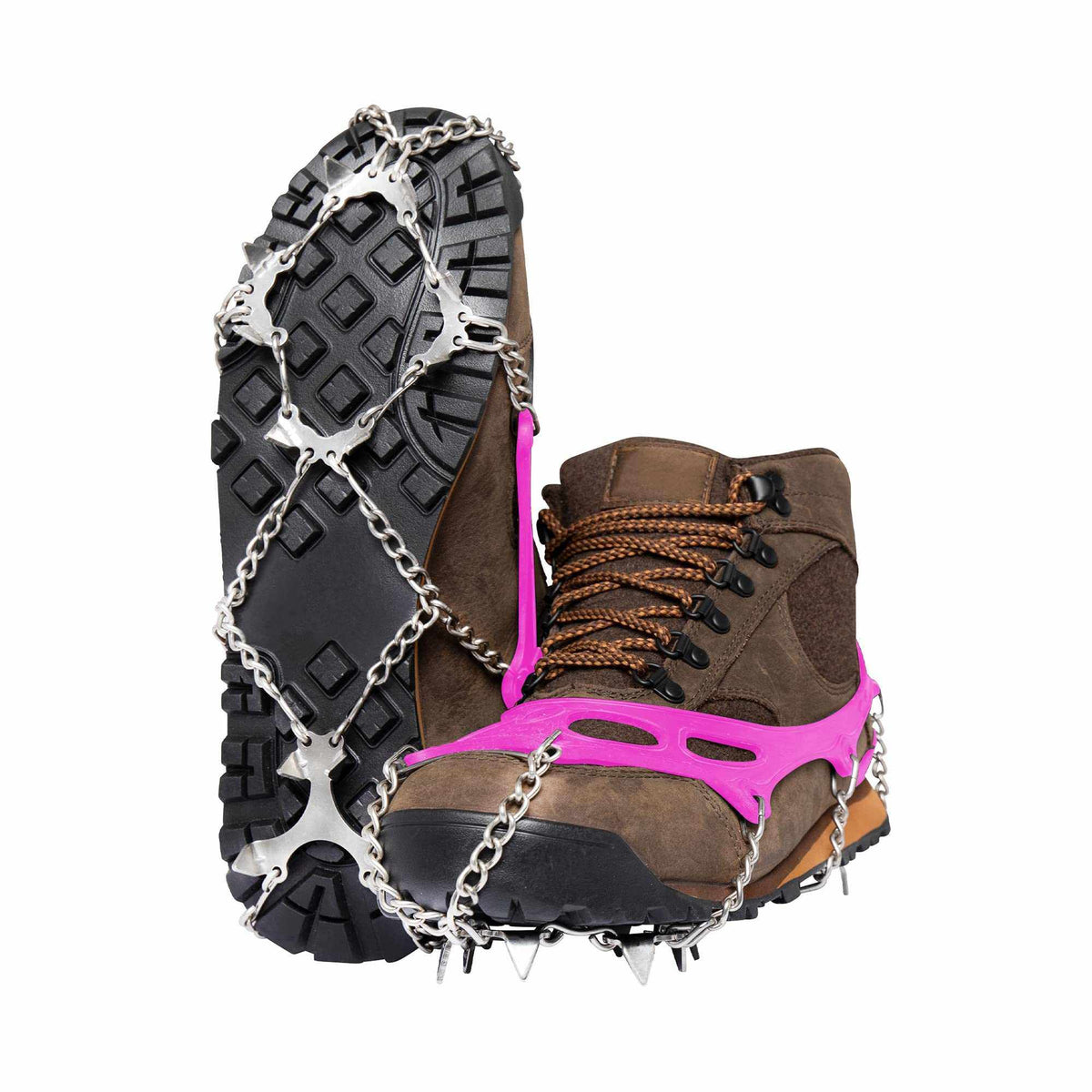
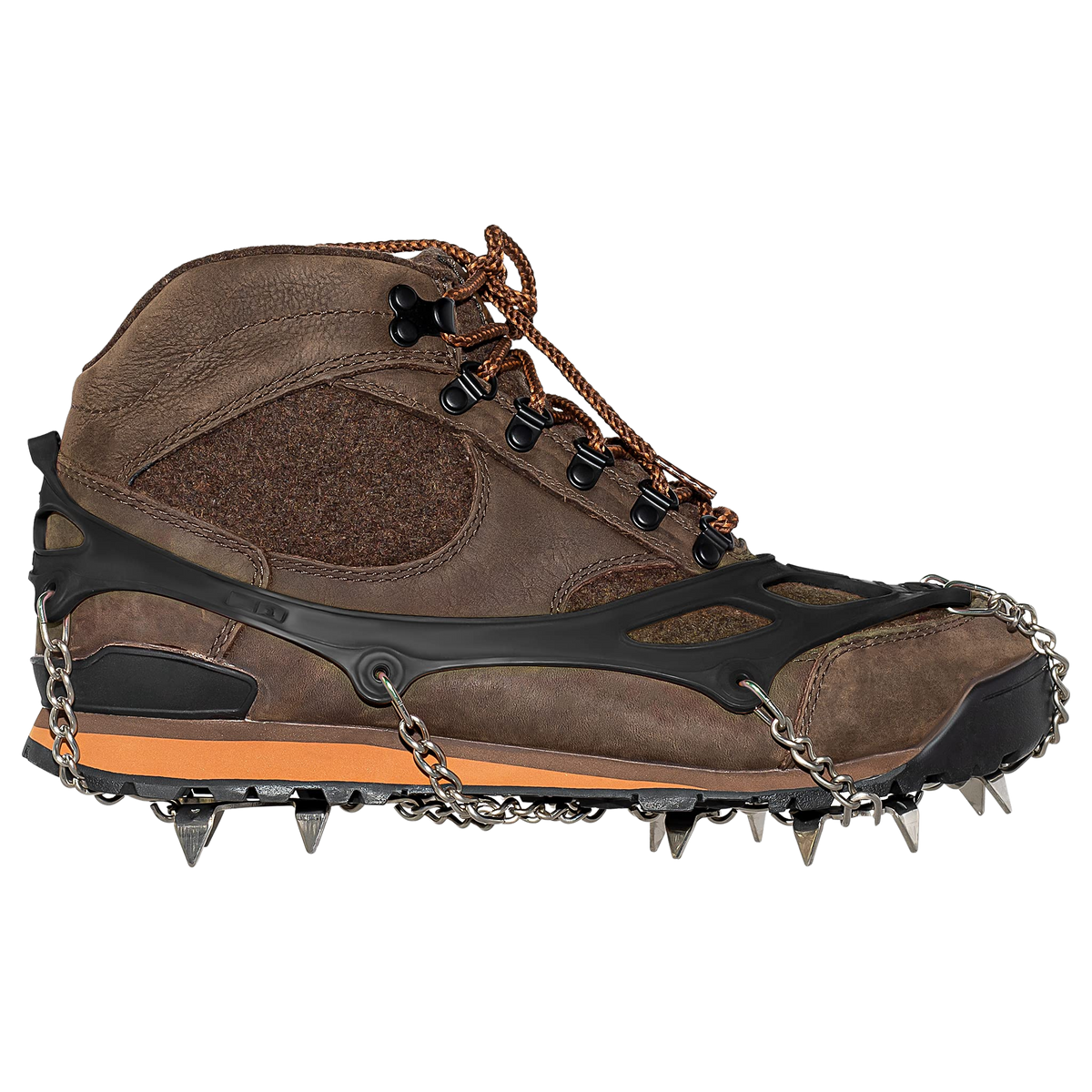
- Chain-and-spike cleats have longer spikes, often 10 to 15 mm, hung on stainless steel chains under the sole. These are the "microspike" style many hikers carry. Ours are 15 mm.
Spikes don't rely on edges pressing against the surface. They pierce the top layer of ice and anchor each step. That's why they keep working when ice is thick, lumpy or on a slope.
Where coil cleats work best
- Flat, packed snow. City sidewalks after the plow has been through, packed paths in the park, the dog-walking loop around the block.
- Thin ice on flat ground. A glaze on the driveway or a slick patch at the bus stop.
- Walking that feels natural. Coils sit low, so many people barely notice them. There are no points to catch on a curb.
Where coil cleats struggle
Every design has limits, and coils have a few worth knowing before you buy.
- Bare pavement and gravel. Yaktrax's own FAQ says its devices are "not intended for use on gravel, concrete, or sanded roads cleared of snow," because those surfaces stop the coils from compressing properly and can damage them. In a Canadian city, where sidewalks are often half ice and half bare concrete, that matters. You may end up taking them on and off, or wearing out the coils faster.
- Steep or technical ground. Switchback Travel notes coil traction is "not built for technical terrain or steep slopes." On a hill, you need something that bites in rather than presses down.
- Thick, rutted, glare ice. Think of a Calgary sidewalk after a chinook: meltwater refreezes into lumpy, glass-hard ruts. Edges that press against the surface have less to hold on to than a point that pierces it.
- Upkeep. Yaktrax recommends you "periodically pinch the coils" back into shape to keep them working. It's an easy job, but it's one more thing to remember.
Where spike cleats work best (and where they don't)
Spikes earn their keep on harder, rougher ice:
- Freeze-thaw ruts and refrozen slush, the kind that covers prairie and Eastern sidewalks after a January thaw.
- Icy hills, ramps and driveways where you need a point to hold on a slope.
- Winter trails, especially shaded switchbacks and canyon floors that stay icy for months.
- Lake ice and ice fishing, where wind polishes the surface smooth.
To be fair, spikes have trade-offs too:
- They're overkill for some city walking. Long chain spikes on a mostly cleared sidewalk feel clunky. That's why we sell low-profile models for town.
- Wet, heavy snow can ball up under chain spikes. Knock your boots together to clear it.
- Bare pavement wears any traction. Stainless spikes hold up well, but grinding across long stretches of dry concrete will dull them over time. Take them off when the path is clear.
- Metal is slippery indoors. Spikes slide on tile and polished concrete. Always take them off at the door.
Coil cleats vs spike cleats compared
| Coil cleats | Low-profile spike cleats | Chain-and-spike cleats | |
|---|---|---|---|
| How it grips | Coil edges press against snow and ice | Short studs or spikes pierce the surface | Longer spikes (often 10–15 mm) anchor into ice |
| Best for | Flat packed snow, thin ice, easy walks in town | Sidewalks, parking lots, commuting, errands | Rutted ice, hills, winter trails, lake ice |
| Less suited to | Steep slopes, thick rutted ice, long stretches of bare pavement | Steep trails and deep snow | Cleared pavement, indoor floors |
| Feel underfoot | Very low, close to the ground | Low | You notice them, but they're secure |
| Upkeep | Reshape coils from time to time (per Yaktrax) | Rinse off salt, dry | Rinse off salt, dry, check chains |
| Yatta Life option | We don't make a coil cleat | City Spikes $26, Urban Spikes $45 | Ice Spikes $65, Mount Tracks $60, Trail Spikes $80 |
How to choose: four questions
- What does your ice look like? If it's mostly packed snow on flat sidewalks, coils or low-profile spikes both work. If it's lumpy, refrozen, glass-hard ice, choose spikes.
- Is it flat or sloped? Hills, ramps, steep driveways and trails all favour spikes.
- How much bare pavement is on your route? If you cross a lot of cleared concrete, you'll want something easy to slip off and pocket, and you'll want to know how the traction handles pavement. The manufacturer's guidance for coils is to avoid cleared concrete.
- Who's wearing them? Older walkers often do best with something light and simple to put on while seated. Kids need small sizes and short spikes. Hikers need longer spikes and a harness that stays put.
Not sure about sizing? See how to properly fit ice cleats on shoes. Loose traction rolls under your foot, whatever the design.
Yatta Life alternatives by use
We're a Calgary company, and we only make spike-style traction. Here's what we'd suggest instead of a coil cleat, depending on where you walk.
Sidewalks, errands and the bus stop: City Spikes ($26)
City Spikes have 10 steel spikes under a slip-on TPR harness. They're small enough for a coat pocket, so you can pull them off when you reach dry pavement or step inside. If you were looking at a coil cleat for town, this is the closest match in use.
Commuting and road running: Urban Spikes ($45)
Urban Spikes are low profile, so you walk and jog naturally on cleared streets with icy patches. They come with a carry case for your bag or desk.
Rutted ice, hills, dog walks and trails: Ice Spikes ($65)
Ice Spikes use 15 mm stainless steel spikes on welded chains, with an elastomer harness tested to –40 °C. A pair weighs 300–340 g. This is our all-rounder for freeze-thaw ice, winter hiking and ice fishing. They aren't made for technical mountaineering or vertical ice. For that, use rated crampons.
Uneven ground and work outside: Mount Tracks ($60)
Mount Tracks have 13 stainless spikes (15 mm) and a Velcro strap over the top of the foot. The strap keeps them centred when you twist with a shovel or a dog pulls you sideways.
Running and kids
Winter runners on packed trails should look at Trail Spikes ($80), which put stainless spikes on a flexible chain. For kids, SureStep Kids ($40) have short 7 mm spikes and fit toddler size 9 to kids' size 7.
See the whole range side by side in our winter traction collection, or read our best ice cleats in Canada picks.
What does it cost in Canada?
Prices change often, so here's a snapshot from Canadian sources at the time of writing (November 2026). These are regular listed prices, before any sales.
| Product | Design | Where listed | Price (CAD) |
|---|---|---|---|
| Yaktrax Pro | Coil cleat with strap | MEC | $41.95 |
| Yaktrax Run | Coils under heel and midfoot, removable carbide spikes under forefoot | MEC | $53.95 |
| Yatta Life City Spikes | Low-profile spike cleat | yatta.ca | $26.00 |
| Yatta Life Urban Spikes | Low-profile spike cleat | yatta.ca | $45.00 |
| Yatta Life Ice Spikes | Chain-and-spike, 15 mm | yatta.ca | $65.00 |
For in-town walking, City Spikes cost $15.95 less than the Yaktrax Pro's MEC price at the time of writing. For winter running on roads, Urban Spikes cost $8.95 less than the Yaktrax Run's MEC price. These products use different designs, so match them by use first and price second. Yatta Life ships free across Canada on orders over $100, with 14-day returns.
Frequently asked questions
What is a good Yaktrax alternative in Canada?
It depends on where you walk. For sidewalks and errands, a light spike cleat like City Spikes ($26) does a similar job. For rutted ice, hills and trails, chain spikes like Yatta Life Ice Spikes ($65) give more bite than coils.
Are coil cleats or spike cleats better on ice?
Neither is better everywhere. Coils grip well on flat packed snow and thin ice and feel close to the ground. Spikes pierce the ice, so they tend to suit thick, lumpy or sloped ice and winter trails.
Can you wear Yaktrax on bare pavement?
Yaktrax's own FAQ says its devices are not intended for gravel, concrete or sanded roads cleared of snow, because those surfaces can damage the coils. Any traction wears faster on bare pavement, so take it off on long dry stretches.
Are ice spikes better than Yaktrax for hiking?
For most winter trails, chain spikes are the more common choice. Reviewers note coil traction isn't built for steep slopes or technical terrain, while 10 to 15 mm chain spikes are designed for icy, uneven trail.
Do spike cleats damage floors?
They can scratch floors, and metal spikes are slippery on tile and polished concrete. Take any traction off before you go inside.
Where can I buy ice cleats in Canada?
Yatta Life is a Calgary company that ships ice cleats and ice spikes across Canada, with free shipping on orders over $100 and 14-day returns. Outdoor retailers like MEC also carry several brands.
Sources: Yaktrax FAQ; Switchback Travel, Best Winter Traction Devices; MEC traction devices; MEC, Yaktrax Running Ice Traction Device. Prices at time of writing, November 2026. Yaktrax is a trademark of its owner.
Pick the design that fits your ice
Coils and spikes are both good tools. Coils are simple and low for flat, snowy walking. Spikes bite into the hard, lumpy, sloped ice that Canadian winters are full of. Think about your route, then pick the design that matches it. For the full breakdown of cleats, spikes, microspikes and crampons, see our complete winter traction guide, and brush up on how to walk on ice while you're at it.

Leave a comment
All comments are moderated before being published.
This site is protected by hCaptcha and the hCaptcha Privacy Policy and Terms of Service apply.