
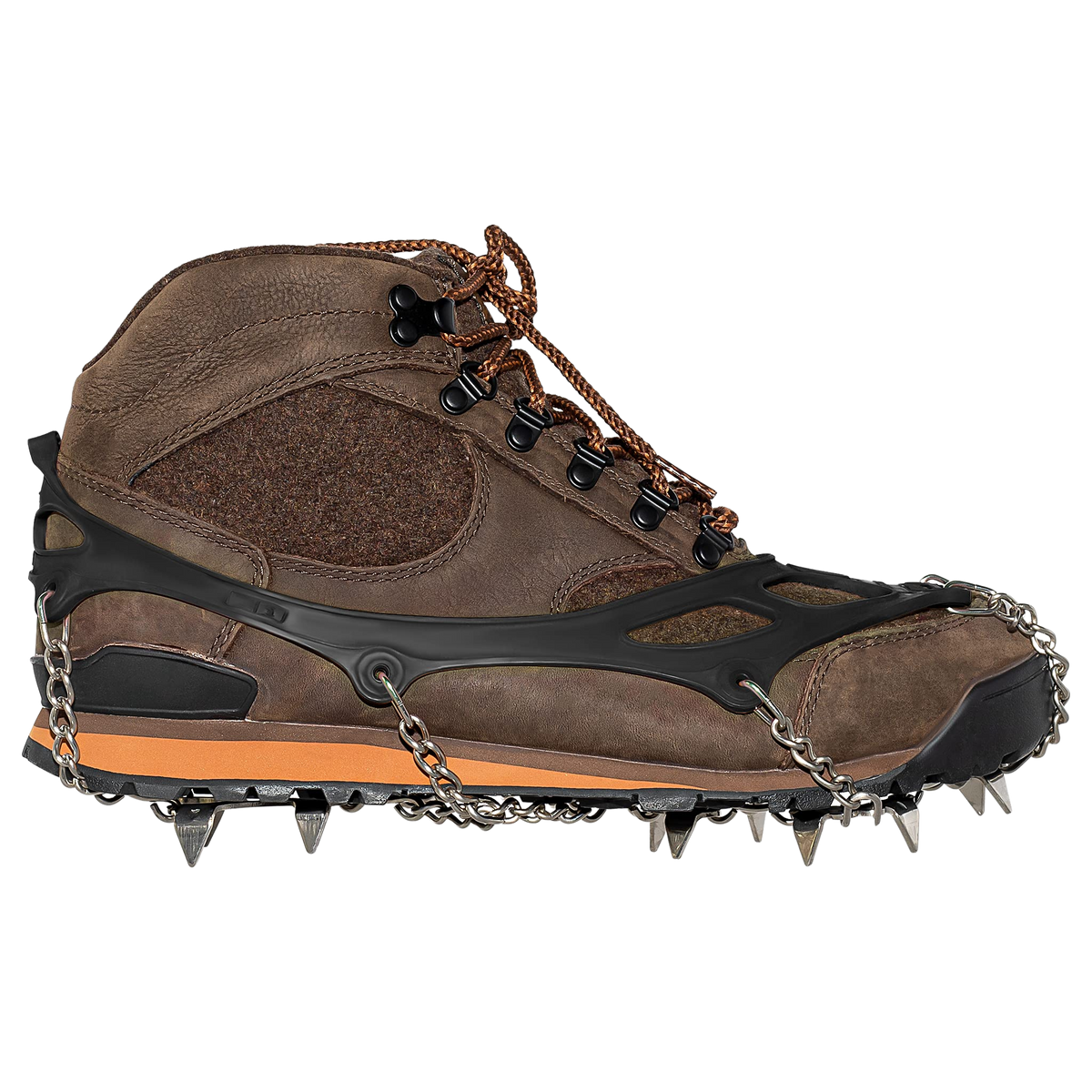
Quick answer: Most Canadian winter hikers need chain-and-spike traction, the style people call "microspikes": spikes around 10 to 15 mm long on chains under a stretchy harness. That covers packed, icy trails like Johnston Canyon, Gatineau Park's hiking loops and lower North Shore trails. Short ice cleats are for sidewalks, not trails. If the route has steep, hard snow where a slip could mean a long fall, you need crampons, an ice axe and the training to use them. Our Ice Spikes ($65) are the chain-and-spike style.
Trail reports and park websites love to say "bring traction". That's good advice, but it doesn't tell you what to buy. Gear stores add to the confusion by using "microspikes", "ice spikes", "ice cleats" and "crampons" for overlapping things. This article is for hikers. It skips the sidewalk advice and focuses on one question: what do you need on your feet for the trail you're planning?
If you want the full side-by-side of every traction type, with sizing and care, that lives in our complete winter traction guide. Here we'll stay on the trail.
First, a word about the name "microspikes"
MICROspikes is a registered trademark of Kahtoola, a US company that makes a well-known chain-and-spike traction device. The name caught on so widely that many hikers, trail guides and even rescue groups now use "microspikes" to mean any traction of that style.
So when a trail report says "microspikes recommended", it almost always means "chain-and-spike traction". It doesn't mean one specific brand. In this article we use "chain-and-spike" or "microspike-style" for the general design, and "MICROspikes" only for Kahtoola's product.
MICROspikes is a registered trademark of Kahtoola Inc. Yatta Life is not affiliated with Kahtoola.
What hikers actually choose between
For hiking, the choice usually comes down to three tools. Spike length is the simplest way to tell them apart.
| Ice cleats | Chain-and-spike ("microspikes") | Crampons | |
|---|---|---|---|
| Typical spike length | Short studs or spikes, a few mm | About 10–15 mm (Kahtoola lists 10.4 mm for MICROspikes; our Ice Spikes are 15 mm) | Longer points on a rigid or semi-rigid frame, often with front points |
| Attaches with | Stretchy harness | Stretchy harness | Straps or bindings; often needs stiffer boots |
| Good on | Sidewalks, parking lots, flat paths | Packed snow and ice on hiking trails, canyon floors, moderate slopes | Steep hard snow, alpine routes, glaciers |
| Not for | Real trails or slopes | Steep hard snow with fall consequences, vertical ice | Casual walks (overkill) |
| Fits on | Shoes and boots | Hiking boots, winter boots, trail runners | Usually stiff mountaineering boots |
Kahtoola describes its MICROspikes as traction "for confidence on ice and packed snow in mountainous terrain". That's a good description of the whole chain-and-spike category. It fills the big gap between sidewalk cleats and real crampons, and it's where most Canadian hiking happens.
Do I need microspikes? Ask these five questions
1. Is the trail packed and icy, or deep and soft?
Chain spikes are made for packed snow and ice. If you're breaking trail through deep, fresh snow, spikes won't hold you up. You need snowshoes. Many winter hikers carry both, because a packed lower trail can turn into deep snow higher up.
2. Has it thawed and refrozen?
This is the big one in Canada. A trail that was soft and grippy in December can be solid ice by February after a few warm days. Chinooks in Alberta, January thaws in Ontario and Quebec, and coastal rain on the North Shore all turn packed trails into ice. If there's been a melt and then a freeze, bring spikes.
3. Is there a light dusting over old ice?
A light layer of new snow on top of an old, icy trail looks grippy and feels fine for the first few steps. Underneath, it's still ice. Fresh snow is not a reason to leave spikes at home.
4. How steep is it, and what happens if you slip?
This is the question that decides between spikes and crampons. On a moderate trail, a slip in chain spikes usually means a fall where you land. On a steep slope of hard snow above rocks, trees or a drop, a slip can turn into a long slide you can't stop. That terrain calls for crampons, an ice axe and training. If you can't answer "what happens if I slip here?" with "I'd just fall over", microspike-style traction isn't enough.
5. Is the route in avalanche terrain?
Traction does nothing about avalanche risk. Many popular Rockies and Coast Mountain routes cross or sit below avalanche slopes in winter. Check the forecast at Avalanche Canada and the land manager's trail report, and if a route needs avalanche training and gear, traction is the least of your concerns.
When you need crampons instead
Chain spikes are not a cheaper crampon. They're a different tool. You need crampons, not spikes, when:
- You're climbing or descending steep, hard snow where a slip could become a slide.
- You'll be on glaciers or alpine routes.
- You're on steep water ice or frozen waterfalls you plan to climb, not walk beside.
- The route description, guidebook or park staff say crampons and an ice axe are required.
Our Ice Spikes are not designed for technical mountaineering or vertical ice. If you're heading somewhere that needs crampons, take a course, and consider hiring a certified guide for your first trips.
Canadian trail examples
Conditions change daily, so always check the official trail report before you go. These examples show the kind of terrain where chain spikes are commonly recommended.
The Rockies: canyon ice walks
Johnston Canyon in Banff National Park is one of the country's best-known winter walks. In winter its catwalks are often very icy. Parts of the trail are closed for repairs this season, so check Parks Canada before you go, and see our Rockies winter walks guide for what's open. Grotto Canyon in Kananaskis follows a frozen creek bed. On both, the catwalks and canyon floors are packed and polished by heavy foot traffic, which is exactly what chain spikes are made for. For more Alberta routes, see our best Alberta winter hikes for ice spikes.
Higher up, it's a different story. Routes that climb onto open slopes above treeline can involve avalanche terrain and hard, steep snow. That's crampon and avalanche-gear country, not microspike country.
Gatineau Park: freeze-thaw loops
The National Capital Commission maintains winter walking and hiking trails in Gatineau Park, including the Lauriault Trail near Old Chelsea. The terrain is rolling rather than alpine. The challenge here is the freeze-thaw cycle, which can turn packed trails and rocky climbs icy. Chain spikes are a common choice for these trails after a thaw.
The North Shore: coastal ice and false spring
Vancouver's North Shore mountains catch a lot of people out. It can be raining in the city while trails a few hundred metres up are packed snow and ice. North Shore Rescue has urged hikers to carry microspikes on icy trails, especially on more remote hikes. Vancouver Trails suggests that from November to May, hikers carry at least microspikes or traction devices on any trail that climbs above about 800 m. Steeper peaks on the North Shore can need more than spikes, and parts of them sit in avalanche terrain.
Which Yatta Life traction suits your hike?
| Your hike | Our pick | Why | Price (CAD) |
|---|---|---|---|
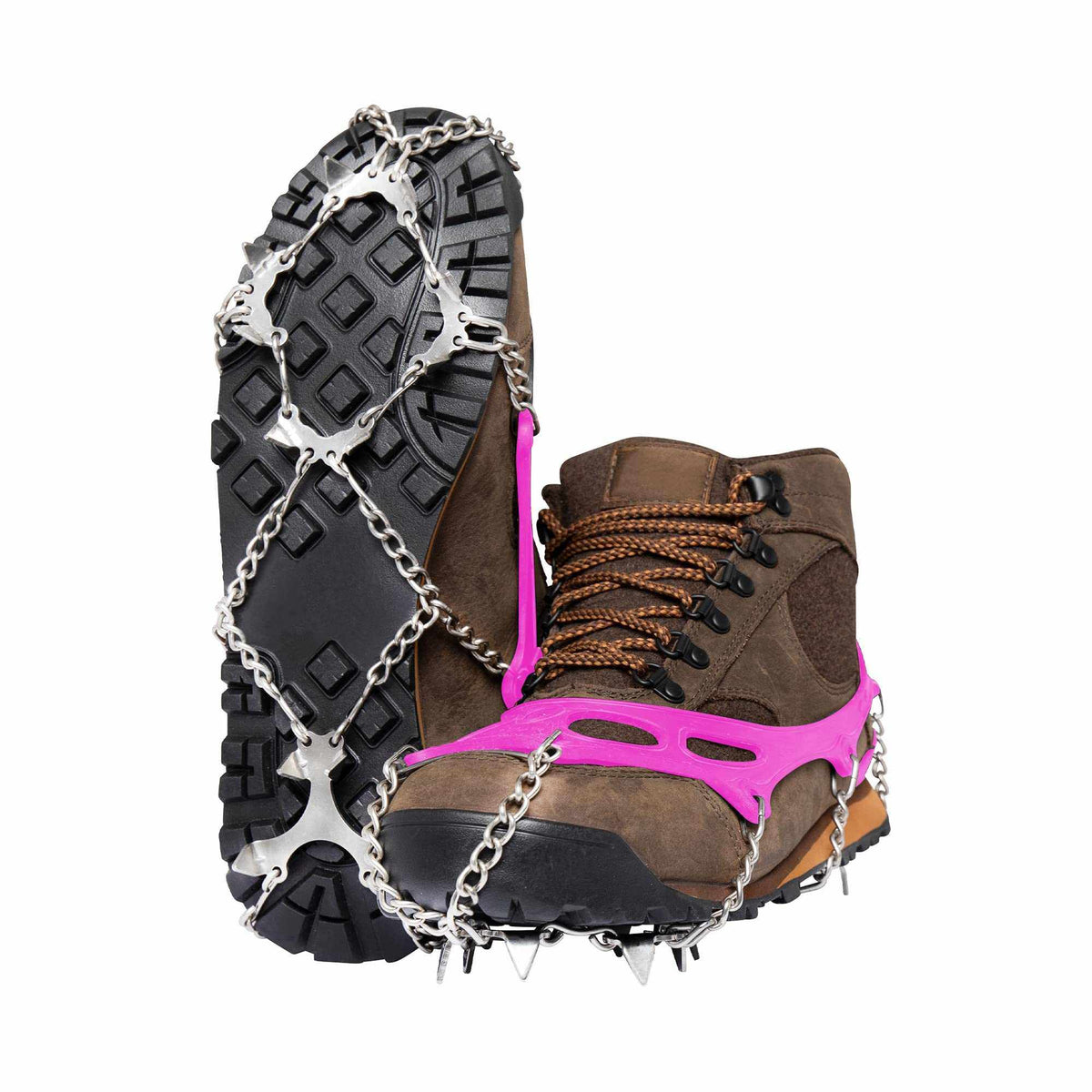
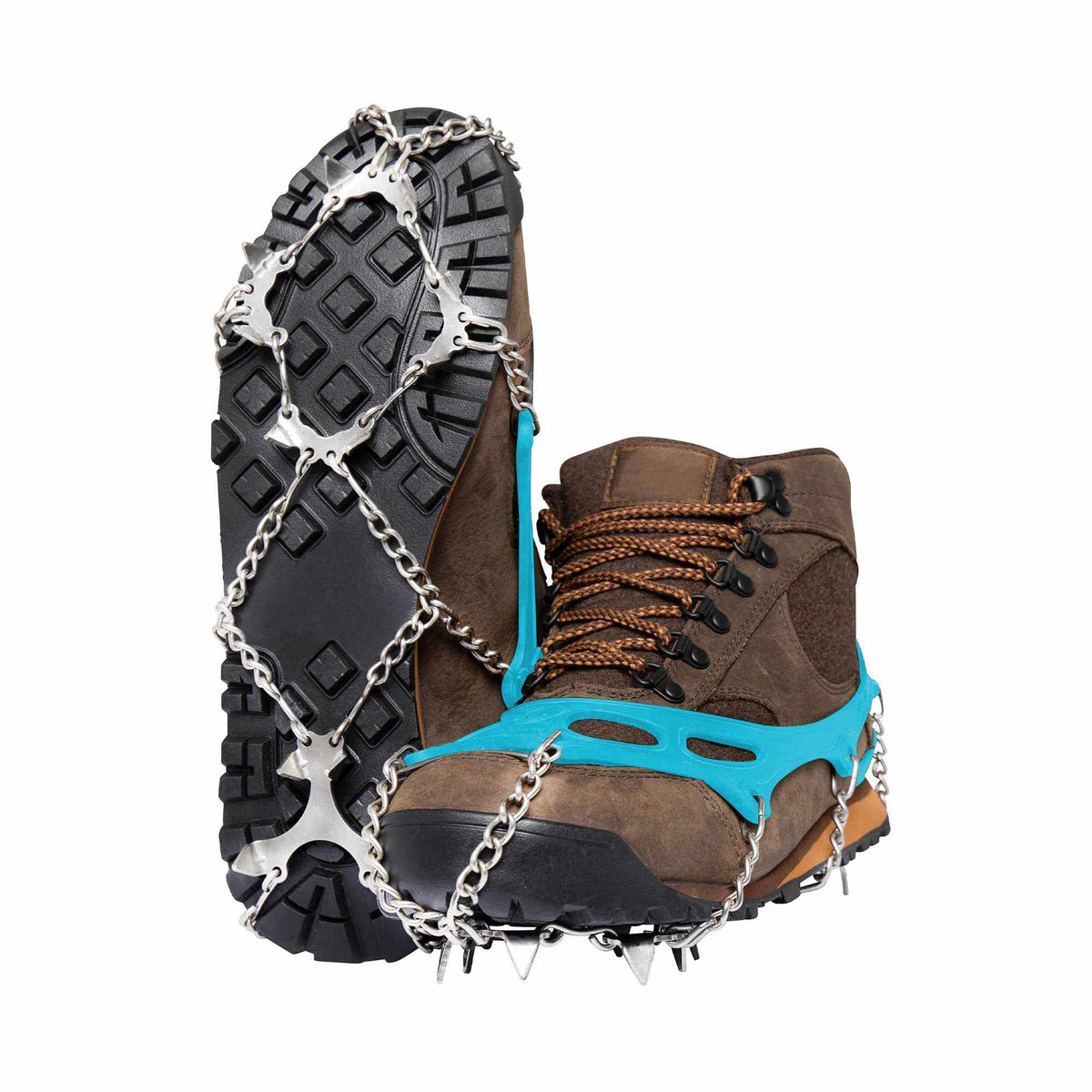
| Most winter day hikes | Ice Spikes | 15 mm stainless steel spikes on welded chains, harness tested to –40 °C, 300–340 g a pair | $65.00 |
| Full winter hiking setup | Winter Hiker Kit | Ice Spikes plus gaiters and waterproof socks | $162.00 |
| Fast hiking and trail running | Trail Spikes | Flexible chain moves with your stride | $80.00 |
| Rough, rocky or uneven trail | Mount Tracks | 13 stainless spikes (15 mm) and a Velcro strap that keeps them centred | $60.00 |
| Kids on easy family trails | SureStep Kids | Short 7 mm spikes, light at 170–180 g | $40.00 |
On price: at the time of writing (November 2026), MEC lists Kahtoola MICROspikes at $105.95. Our Ice Spikes are $65, which is $40.95 less. They're different products with different specs, so compare spike length, weight and fit, not just the price. Browse everything in our winter traction collection. Shipping is free across Canada on orders over $100, and returns are accepted within 14 days.
A short trail checklist
- Put spikes on before the ice, not halfway across it. Sit on a log or a rock if you can.
- Size for your hiking boots, not your sneakers. A loose harness lets the chains roll. See how to fit ice cleats on shoes.
- Knock off snowballs that build up under the chains in wet snow.
- Walk flat-footed so all the spikes touch the ice. Our guide to walking on ice covers technique.
- Bring poles for balance on descents.
- Turn around if the trail gets steeper or harder than your traction is built for.
Frequently asked questions
Do I need microspikes for winter hiking in Canada?
On most packed, icy winter trails, yes. Chain-and-spike traction is commonly recommended for trails like Johnston Canyon in Banff, Gatineau Park's hiking loops and lower North Shore trails. In deep, unpacked snow you need snowshoes instead.
What is the difference between microspikes and ice cleats?
Microspike-style traction has longer spikes, about 10 to 15 mm, on chains, and is built for hiking trails. Ice cleats usually have short studs or spikes and are built for sidewalks and parking lots.
Is "microspikes" a brand?
Yes. MICROspikes is a registered trademark of Kahtoola. Many people use the word for any chain-and-spike traction.
When should I use crampons instead of microspikes?
Use crampons on steep, hard snow where a slip could turn into a slide, on glaciers and alpine routes, and on ice you plan to climb. Crampons need the right boots and training.
How long should microspike spikes be?
Most chain-and-spike devices for hiking have spikes around 10 to 15 mm long. Kahtoola lists 10.4 mm for its MICROspikes, and Yatta Life Ice Spikes are 15 mm.
Can I wear microspikes with trail runners?
Chain-and-spike traction fits over trail runners, hiking boots and winter boots. Pick the size for the footwear you'll actually wear, and choose warmer, waterproof footwear for long winter outings.
Sources: Kahtoola MICROspikes product page; MEC traction devices (price at time of writing, November 2026); Curiocity, Johnston Canyon in winter (quoting Parks Canada); NCC, Winter hiking and walking in Gatineau Park; Daily Hive, North Shore Rescue on microspikes (2022); Vancouver Trails winter gear FAQ; Avalanche Canada. MICROspikes is a registered trademark of Kahtoola Inc.
Pack the right traction, then go
For most Canadian winter hikes, chain-and-spike traction is the right tool. Leave sidewalk cleats for town, and save crampons for steep, serious terrain. Check conditions, think about what happens if you slip, and pick the traction that matches the trail. Start with Ice Spikes, or compare all our picks in best ice cleats and ice spikes in Canada.

Leave a comment
All comments are moderated before being published.
This site is protected by hCaptcha and the hCaptcha Privacy Policy and Terms of Service apply.