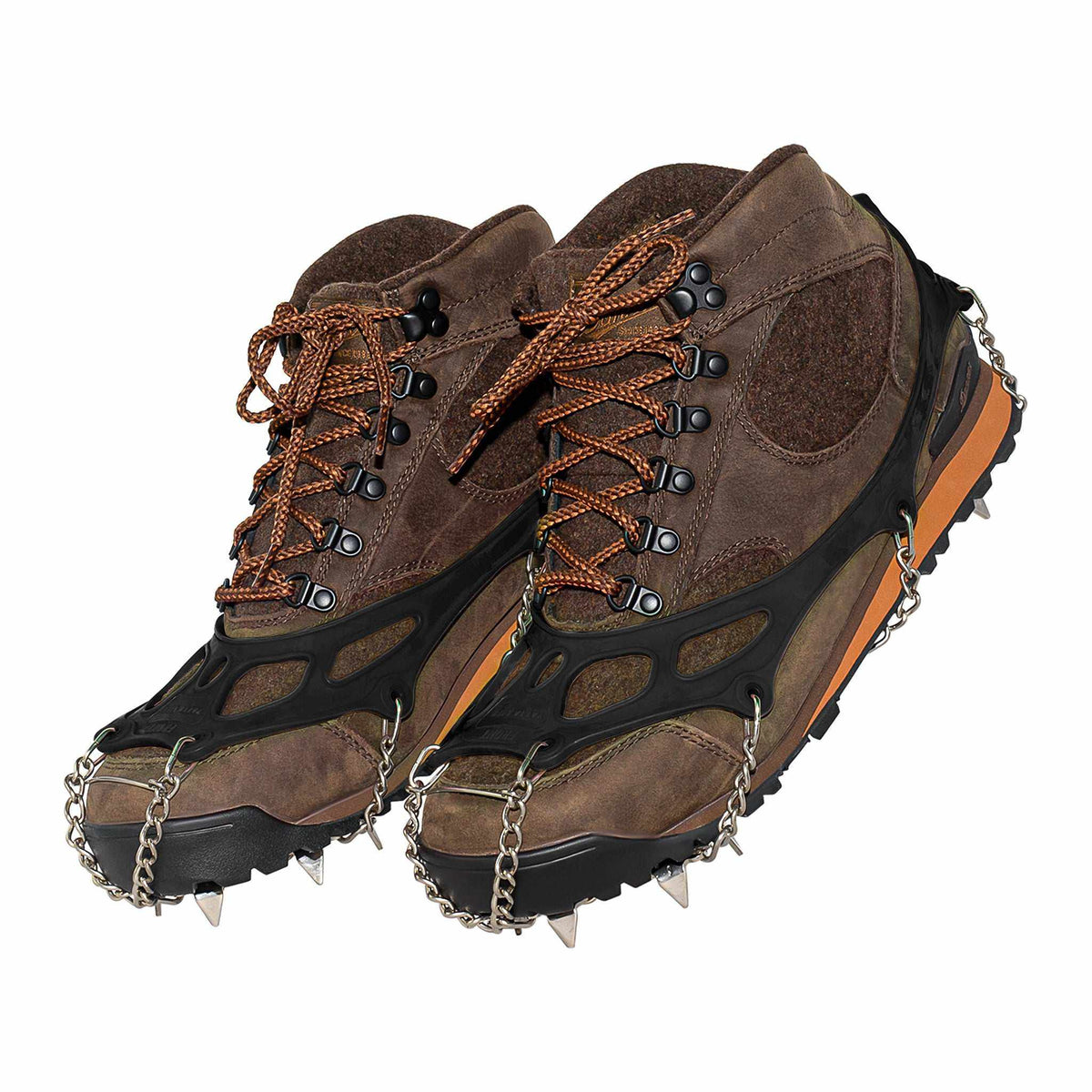
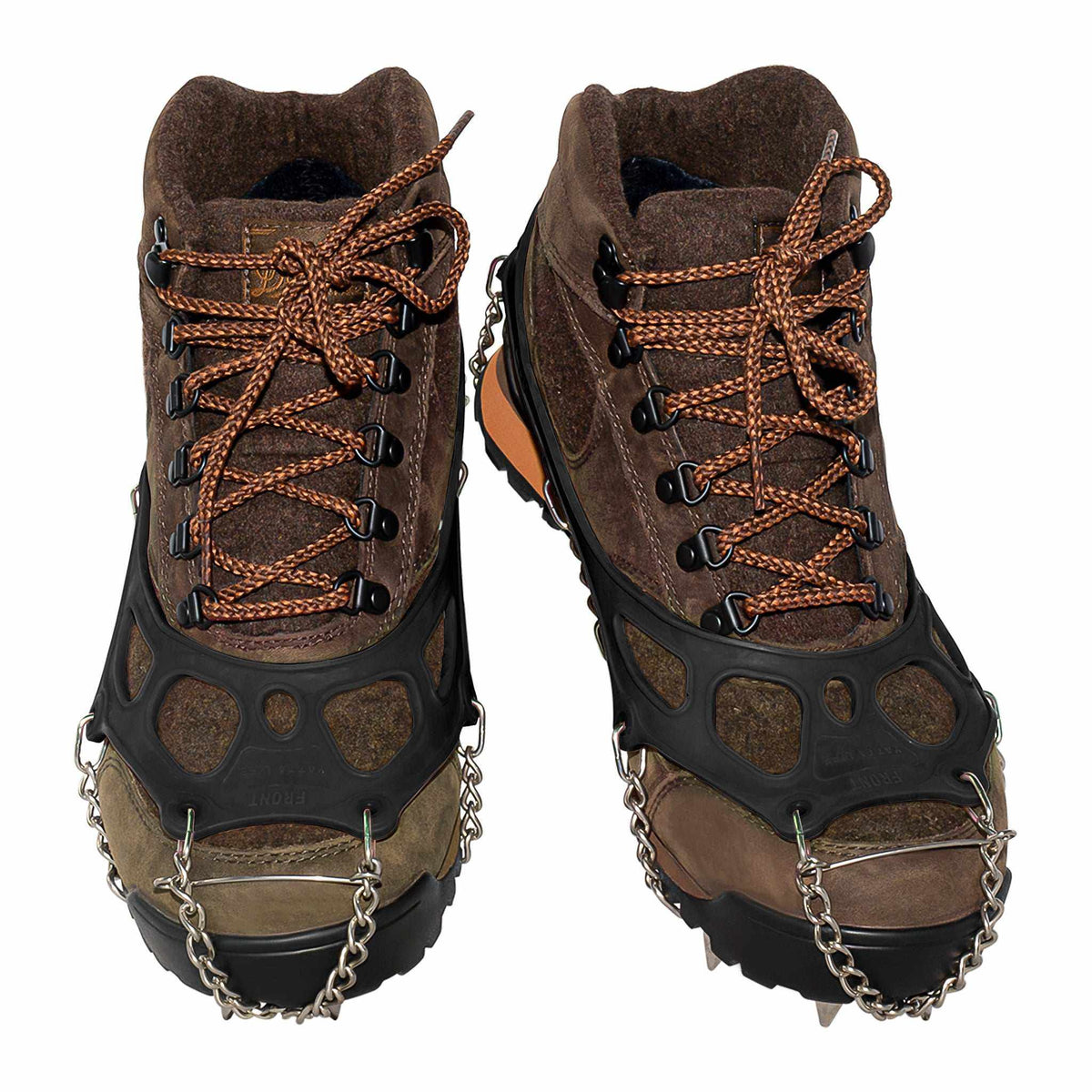
Quick answer: Most Canadians walking in the city are well served by light, slip-on City Spikes ($26). If your city gets freeze-thaw cycles, freezing rain or rutted refrozen ice (Calgary, Ottawa, Montreal, Halifax, St. John's), step up to Ice Spikes ($65) with 15 mm stainless steel spikes. If you hike or run in winter anywhere in Canada, choose Ice Spikes or Trail Spikes ($80). Find your city below.
"Canadian winter" isn't one thing. A Calgarian and a Haligonian can both say "it's icy out" and mean completely different surfaces. Chinooks in Alberta melt sidewalks at lunch and freeze them into ruts by dinner. Freezing rain in the Ottawa Valley glazes everything in clear ice. On the Prairies, hard-packed snow gets polished smooth at every crosswalk and stays that way until April. On the coast, wet snow turns to slush, then to ice, on hills that were never built for winter.
The right traction depends on which of those you deal with. We're a Calgary company, we've been making winter traction for Canadians for years, and we hear from customers in every province. Here's what we've learned, city by city.
First, the three kinds of Canadian ice
Almost every icy surface in Canada falls into one of three groups, and each one asks something different of your footwear:
- Glaze ice from freezing rain or meltwater that refreezes overnight. It's smooth, clear and often invisible (black ice). Short spikes grip it well, as long as they cover the whole sole.
- Rutted refrozen ice from freeze-thaw cycles: footprints, tire tracks and slush that freeze hard and lumpy. It's uneven, so you need longer spikes that reach the low spots and a harness that won't twist off.
- Polished packed snow on cold, dry Prairie sidewalks and trails. It's hard, smooth and stays all season. Almost any cleat helps, and studs or spikes across the forefoot matter most.
One more thing worth knowing: ice is slipperiest at around –7 °C, not in the deep cold. That's why "mild" winter days in Toronto or Halifax can be more dangerous than a –30 °C morning in Winnipeg. We cover the science in How to Walk on Ice Without Falling.
Calgary and southern Alberta: chinook country
What winter looks like: Calgary's signature problem is the chinook. Warm, dry winds sweep down off the Rockies, temperatures jump above zero, and snow melts across sidewalks and pathways. Then the chinook leaves and everything refreezes into lumpy, rutted ice. According to Environment Canada calculations reported by CBC, Calgary averages around 25 chinook days between December and February, roughly one every three or four days. Lethbridge and the rest of southern Alberta get them even more often.
The ice you'll meet: rutted refrozen ice on sidewalks and pathways, glaze ice at the bottom of driveways and in shaded spots, and hard-packed ice on the Bow River pathway and in off-leash parks.
Our pick: Ice Spikes ($65). The 15 mm stainless steel spikes reach into chinook ruts that shorter cleats skate over, and the harness is tested to –40 °C for the cold snaps in between. For quick trips to the car or the C-Train, keep a pair of City Spikes in your coat pocket.
Local tip: the morning after a chinook breaks is the worst time to be on foot. If you run here, read Top Tips for Winter Running in Calgary.
Edmonton and northern Alberta: long, cold and packed
What winter looks like: Edmonton gets fewer chinooks and a longer, steadier winter. Snow packs down and stays, and the shoulder seasons (November and March) bring repeated freeze-thaw days that glaze sidewalks every night.
The ice you'll meet: polished packed snow all winter, glaze ice in November and March, and steep, icy stairs and paths in the river valley.
Our pick: Ice Spikes ($65) if you walk the river valley or walk a dog, City Spikes ($26) for flat sidewalk commutes. Runners on the river valley trails should look at Trail Spikes ($80).
Saskatoon and Regina: Canada's fall capital
What winter looks like: cold, dry and windy, with snow that packs and polishes. Wind scours sidewalks down to bare, shiny ice. The numbers back this up: CBC reported that between 2011 and 2016, Saskatchewan had the highest rate of hospitalizations from falls on ice of any province, at 43.4 per 100,000 people.
The ice you'll meet: wind-polished ice on open sidewalks and parking lots, and packed snow that's slick at every crosswalk.
Our pick: City Spikes ($26) for everyday walking. They're cheap enough to keep a pair at home, at work and in the car. For older walkers, Mount Tracks ($60) add a Velcro strap for a more secure fit.
Winnipeg: deep cold and polished sidewalks
What winter looks like: Winnipeg is one of the coldest big cities in the world, and its ice behaves accordingly. Deep cold makes ice a little less slippery than ice near zero, but snow packs and polishes at bus stops, crosswalks and building entrances, and it stays there for months. Spring and fall freeze-thaw days bring glaze ice.
The ice you'll meet: polished packed snow at high-traffic spots, and glaze ice in the shoulder seasons.
Our pick: City Spikes ($26) for daily walking. For deep-cold days, make sure the harness can handle it: our Ice Spikes ($65) are tested to –40 °C and stay stretchy when some rubber harnesses stiffen in the cold.
Toronto and the GTA: the near-zero problem
What winter looks like: Toronto's winters hover around freezing. That sounds mild, but it's actually the most slippery range there is. Snow turns to slush, slush refreezes overnight, and freezing rain and drizzle glaze everything a few times each winter. Ice near 0 °C often has a layer of meltwater on top, which is about as slippery as surfaces get.
The ice you'll meet: wet ice near zero, refrozen slush at curbs and TTC stops, and glaze ice after freezing rain.
Our pick: the Winter Commuter Pack ($55): City Spikes plus waterproof socks, because Toronto slush soaks feet as often as it trips them. If you walk a dog or deal with hills, step up to Ice Spikes ($65). Commuters who walk briskly will like the low-profile Urban Spikes ($45).
Local tip: take cleats off before stepping onto the subway, a bus or any tiled floor. Metal spikes are slippery on hard floors.
Ottawa: freezing rain country
What winter looks like: real cold, real snow, and a lot of freezing rain. The Ottawa Valley and the St. Lawrence corridor are among the most freezing-rain-prone parts of Canada, and anyone who lived through the January 1998 ice storm remembers what a few days of it can do. Add regular January thaws and you get some of the most varied ice in the country.
The ice you'll meet: glaze ice from freezing rain, rutted refrozen ice after thaws, and packed snow on the canal pathways and in the parks.
Our pick: Ice Spikes ($65). Freezing rain coats every surface, including the hills, steps and driveways you can't avoid, so you want full-sole coverage and steel that bites.
Montreal and Quebec City: stairs, hills and ice storms
What winter looks like: heavy snow, freezing rain and plenty of freeze-thaw, plus a uniquely Montreal hazard: those famous outdoor staircases. Quebec City adds steep streets and stairways in the old city. Snow removal is excellent on main streets, but steps, side streets and sidewalks between storms are another story.
The ice you'll meet: glaze ice from freezing rain, ice-coated outdoor stairs, and refrozen slush on hills.
Our pick: Ice Spikes ($65) or Mount Tracks ($60). On stairs, a cleat that stays perfectly in place matters most, and the Mount Tracks strap helps keep the cleat from twisting on a step edge. Always hold the railing, even with cleats.
Halifax and the Maritimes: rain, freeze, repeat
What winter looks like: the Maritimes swing above and below zero constantly. Snow falls, rain falls on the snow, and it all freezes overnight. Add Halifax's hills, from downtown up to the Citadel, and you get some of the trickiest walking in the country.
The ice you'll meet: wet ice near zero, glaze ice after rain-on-snow, and refrozen slush on steep sidewalks.
Our pick: Ice Spikes ($65) for the hills, plus waterproof socks. The Winter Commuter Pack ($55) is a good value if you mostly walk flatter routes.
St. John's: Canada's freezing rain champion
What winter looks like: St. John's is famous for freezing rain and drizzle, more than any other major Canadian city. In one April storm, CBC reported that the city saw a record 60 consecutive hours of freezing rain or freezing drizzle. Add steep downtown streets and ocean wind, and glaze ice is a regular part of life from November into spring.
The ice you'll meet: glaze ice from freezing rain and drizzle, often on steep streets, and wet ice near zero.
Our pick: Ice Spikes ($65). Freezing drizzle is exactly the kind of surface that rubber soles can't handle, and the hills leave no room for error.
Vancouver and the Lower Mainland: rare, but brutal
What winter looks like: most winters bring only a few snowy or icy days. But when they hit, wet snow freezes into ice on hills, sidewalks often go unsalted, and few people own winter traction, so a single icy morning catches a lot of people off guard. And the North Shore trails (Grouse, Seymour, Cypress, Lynn Canyon) stay icy for months.
The ice you'll meet: refrozen wet snow on hills, and packed trail ice on the North Shore.
Our pick: City Spikes ($26) to keep in a drawer for the handful of icy days. If you hike or trail run on the North Shore, get Ice Spikes ($65) or Trail Spikes ($80).
Mountain towns: Banff, Canmore, Jasper and Whistler
What winter looks like: packed, icy trails, frozen waterfalls and canyon ice walks (Johnston Canyon and Maligne Canyon both have closures this winter, so see our Rockies winter walks guide for what is open), plus icy town sidewalks. Many winter trails here are simply not walkable without traction.
Our pick: Ice Spikes ($65) for hiking and canyon walks, or the Winter Hiker Kit ($162), which bundles Ice Spikes with boot gaiters and waterproof socks. For trail ideas, see The Best Alberta Winter Hikes for Ice Spikes and 9 of the Best Winter Hikes in Canada. These aren't mountaineering crampons, so don't use them for technical ice or glacier travel.
Quick chooser: the best ice cleats for your city
| City or region | Main winter hazard | Best everyday pick | For hills, trails and dog walks |
|---|---|---|---|
| Calgary, Lethbridge | Chinook refreeze ruts | Ice Spikes $65 | Ice Spikes $65 |
| Edmonton | Packed snow, shoulder-season glaze | City Spikes $26 | Ice Spikes $65 |
| Saskatoon, Regina | Wind-polished ice | City Spikes $26 | Mount Tracks $60 |
| Winnipeg | Deep cold, polished crosswalks | City Spikes $26 | Ice Spikes $65 |
| Toronto, GTA | Wet ice and slush near 0 °C | Commuter Pack $55 | Ice Spikes $65 |
| Ottawa | Freezing rain, thaws | Ice Spikes $65 | Ice Spikes $65 |
| Montreal, Quebec City | Freezing rain, outdoor stairs | Mount Tracks $60 | Ice Spikes $65 |
| Halifax, Maritimes | Rain-on-snow, hills | Commuter Pack $55 | Ice Spikes $65 |
| St. John's | Freezing rain and drizzle, hills | Ice Spikes $65 | Ice Spikes $65 |
| Vancouver, Lower Mainland | Rare refrozen wet snow | City Spikes $26 | Trail Spikes $80 |
| Banff, Canmore, Jasper, Whistler | Trail and canyon ice | Ice Spikes $65 | Winter Hiker Kit $162 |
Buying for the whole family? The Family Winter Traction Pack ($118) includes Ice Spikes, City Spikes and SureStep Kids cleats, about 10% off buying them separately. Kids' sizes run from toddler 9 to kids' 7.
Buying ice cleats in Canada: what to know
- Shipping: we ship across Canada, with free shipping on orders over $100. A family pack, or two adult pairs plus socks, gets you there.
- Returns: 14-day returns if the size or style isn't right.
- Sizing: choose by your regular shoe size, and size up if you'll wear them over bulky winter boots. Our fitting guide walks you through it.
- Order before the first freeze. The first icy week is when most people go looking for cleats, often right after a slip. Getting them early means they're by the door when you need them.
- For workplaces and organizations: if you're equipping staff in any of these cities, see our bulk ice cleat orders page, and read Industrial Ice Cleats for Reducing Slips and Falls.
FAQ
What are the best ice cleats for Calgary?
For most Calgarians, Yatta Life Ice Spikes are the best choice. Chinooks melt and refreeze sidewalks into rutted ice, and 15 mm stainless steel spikes reach into those ruts where shorter cleats slide. For quick trips, keep City Spikes in your pocket.
Do I need ice cleats in Toronto?
Yes, for many people. Toronto winters hover around 0 °C, which is when ice is wettest and most slippery, and freezing rain glazes sidewalks a few times each winter. Light City Spikes, or the Winter Commuter Pack with waterproof socks, handle most Toronto days.
Are ice cleats worth it in Vancouver?
For city walking, a cheap pair of City Spikes is worth keeping in a drawer for the few icy days, when sidewalks are often unsalted and hills are dangerous. If you hike or run on the North Shore in winter, longer Ice Spikes or Trail Spikes are essential.
What ice cleats are best for freezing rain?
For freezing rain, choose cleats with spikes across the whole sole, like Ice Spikes, rather than ones with studs only under the forefoot or heel. Freezing rain coats every surface, so you need grip wherever your foot lands. That makes them a strong choice for Ottawa, Montreal, Halifax and St. John's.
Where can I buy ice cleats in Canada?
You can buy Yatta Life ice cleats and ice spikes online at yatta.ca, with shipping across Canada and free shipping on orders over $100. We're a Calgary company, and our traction is designed for Canadian winters.
Can I wear ice cleats on the bus or subway?
Take them off first. Metal spikes are slippery on smooth hard floors like transit, mall and office tile. Slip-on cleats like City Spikes come off in seconds and fit in a coat pocket.
Still not sure which pair is right for you? Read our picks for the best ice cleats in Canada, the complete guide to winter traction, or browse all our ice cleats and spikes.
Sources: CBC News, chinook days in Calgary (Environment Canada); CBC News, Saskatchewan falls on ice; CBC News, St. John's freezing rain record; Phys.org, "The slipperiness of ice explained" (2018).

Leave a comment
All comments are moderated before being published.
This site is protected by hCaptcha and the hCaptcha Privacy Policy and Terms of Service apply.