
Quick answer: For running on ice, you have three real options: screw-in studs, studded winter running shoes, or slip-on running spikes. Slip-ons are the most flexible because they fit the shoes you already own and come off when the pavement is dry. On roads and paved paths, choose a low-profile slip-on like Urban Spikes ($45). On packed-snow and icy trails, choose a flexible chain spike like Trail Spikes ($80). Then shorten your stride, because no traction fixes a long, reaching step on ice.
Canada has a lot of winter runners. You see them on the Bow River pathway in Calgary, along the river valley in Edmonton and on the canal paths in Ottawa, out in the dark at 6 a.m. with headlamps and frosted eyebrows. Most of them learned the same lesson the hard way: running shoes that feel fine on snow can turn into skates on ice.
This guide is about the traction part of winter running. It compares the main options neutrally, explains which fits road running and which fits trails, and covers how to adjust your form on ice. For the wider picture on clothing and motivation, see our top tips for winter running in Calgary and winter running made effortless.
Why running shoes slip on ice
Running shoes are built for grip on dry asphalt and dirt. Their rubber depends on friction, and ice offers almost none, especially when it's wet near 0 °C. Running also makes the problem worse than walking. You land with more force, you spend part of each stride with no foot on the ground, and you push off hard. Any sideways slip at push-off or landing happens fast.
Deep lugs help in snow, because they dig into something soft. On hard, smooth ice there's nothing for a lug to dig into. That's why runners turn to metal. When Consumer Reports tested four sets of slip-on ice cleats on a rink in 2016, it found that all four "improved on the traction that running shoes provide."
The three kinds of winter running traction
1. Screw-in studs
Some runners screw short metal studs or small hex-head screws into the outsole of an old pair of trail shoes. Commercial stud kits exist too.
- Pros: Cheap. Nothing to put on or take off. Very little extra weight. The shoe feels the same as it always does.
- Cons: It's a permanent change to that pair. You need a thick enough outsole so the screws don't poke through, and studs can work loose or wear down. On long dry stretches of pavement they clatter and wear, and you can't remove them mid-run.
- Best for: Runners who have a dedicated winter pair and run routes that are icy most of the way.
2. Studded winter running shoes
Several shoe brands make winter models with carbide or steel studs built into the sole, often paired with a water-resistant upper.
- Pros: Designed as one system, so fit and stud placement are dialled in. Usually warmer and drier than a regular running shoe.
- Cons: Usually the most expensive option. The studs are short, which is good on pavement but gives less bite in packed snow. They're a second pair of shoes you only use part of the year.
- Best for: High-mileage runners who want one dedicated winter shoe and mostly run on mixed roads and paths.
3. Slip-on running spikes
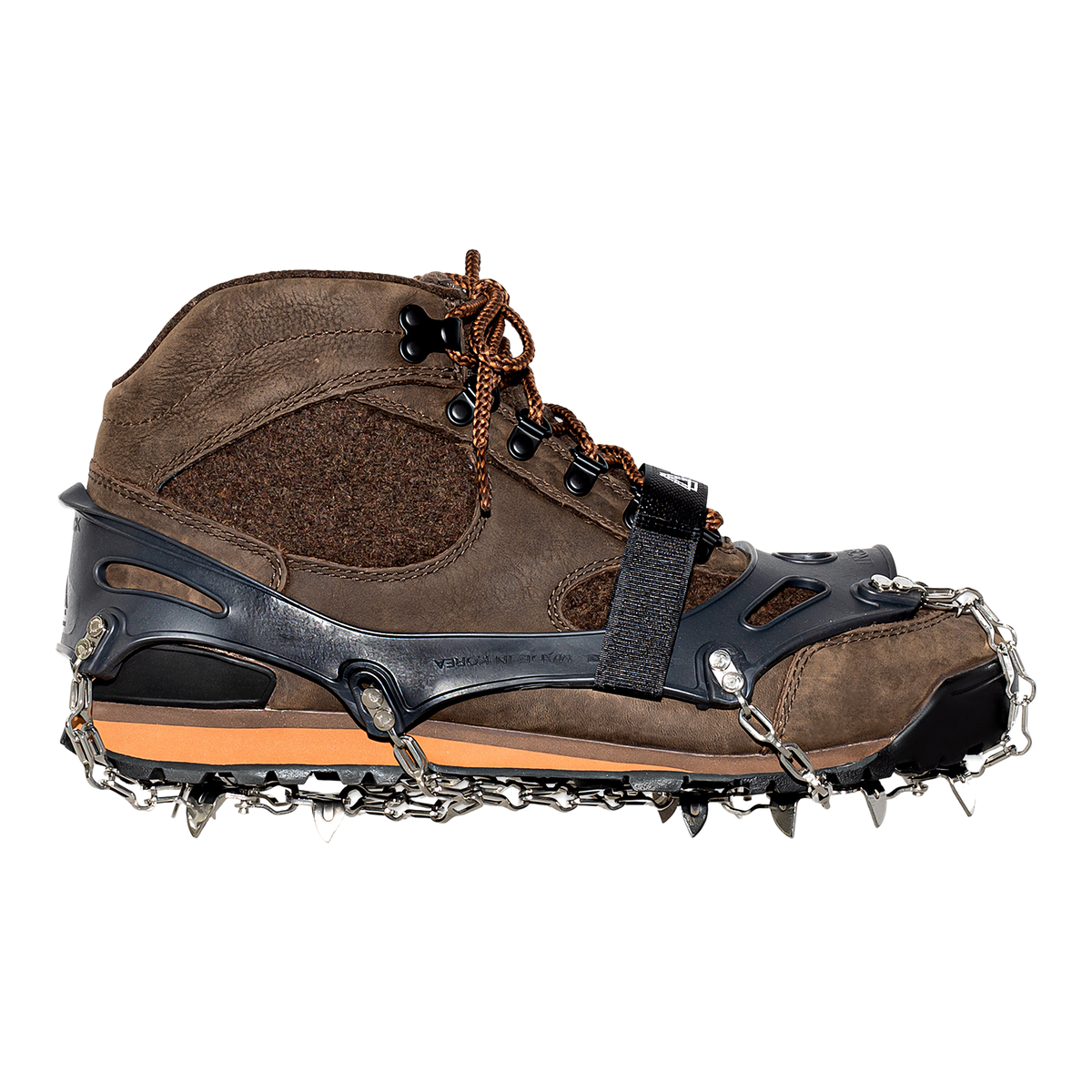
A rubber harness with metal studs or spikes stretches over the shoe you already run in. Low-profile versions are made for pavement. Chain versions with longer spikes are made for trails.
- Pros: Works with any shoe, including your favourite pair. Comes off when the ice ends. Easy to choose a road version and a trail version for different days.
- Cons: Adds some weight. Needs to fit well, or it can shift on the shoe. Takes a minute to put on and take off.
- Best for: Most recreational runners, especially if conditions change from week to week, as they do in chinook country.
| Option | Works with your current shoes? | Removable mid-run? | Best surface |
|---|---|---|---|
| Screw-in studs | Yes, but permanently changes them | No | Icy roads and paths |
| Studded shoes | No, it's a separate pair | No | Icy roads, mixed pavement |
| Low-profile slip-ons | Yes | Yes | Icy roads, sidewalks, paved pathways |
| Chain trail spikes | Yes | Yes | Packed snow, trail ice, hills |
None of these is wrong. The best choice depends on where you run and how often the surface changes.
Choosing traction for road running
Road running in a Canadian winter means a patchwork: bare asphalt, then a sheet of black ice at an intersection, then a slushy curb cut, then a stretch of compacted snow on an unplowed path. You want traction that doesn't feel like running on stilts over the bare sections.
- Keep the profile low. Short studs feel more natural on pavement and wear less. Long spikes are noisy and awkward on asphalt.
- Look for studs under the forefoot. Most runners land toward the middle or front of the foot on ice, especially with a shorter stride.
- Make it easy to carry. If the route clears up, you want to pull them off and tuck them away.
Urban Spikes are our road pick. They sit low, so you can run naturally on mixed pavement and ice, and they come with a carry case. $45.
Choosing traction for trail running
Winter trails are a different surface. Many get packed hard by hikers and snowshoers, then polished into ice on shaded corners, climbs and creek crossings. Short studs can skate on that. You want longer spikes and a sole that can still flex.
- Choose a flexible chain. A rigid plate fights your foot as it rolls through the stride. A chain moves with it.
- Get spikes under the toe and heel. Climbing loads your forefoot. Descending loads your heel.
- Check the harness in the cold. It should stay stretchy and snug when it's well below zero.
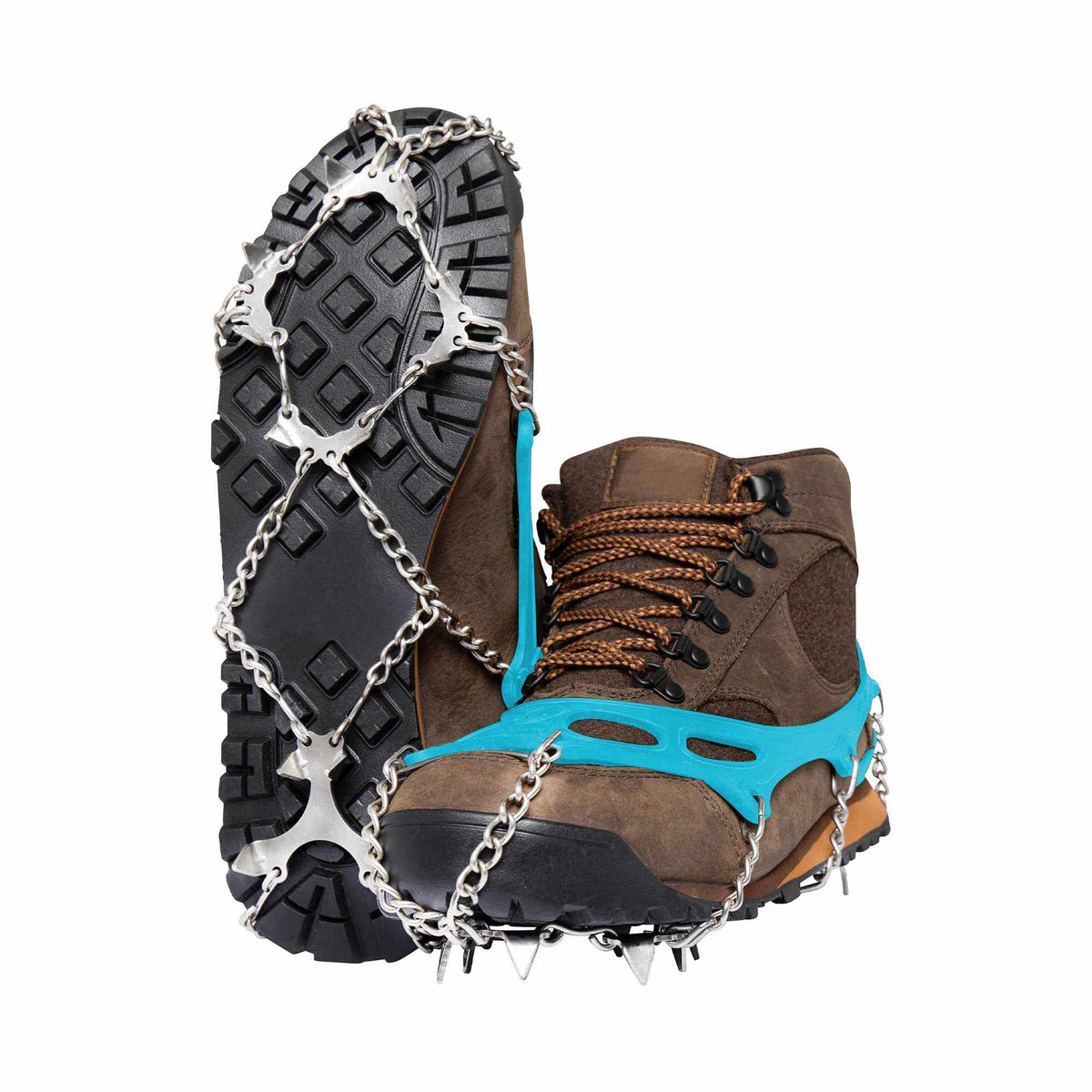
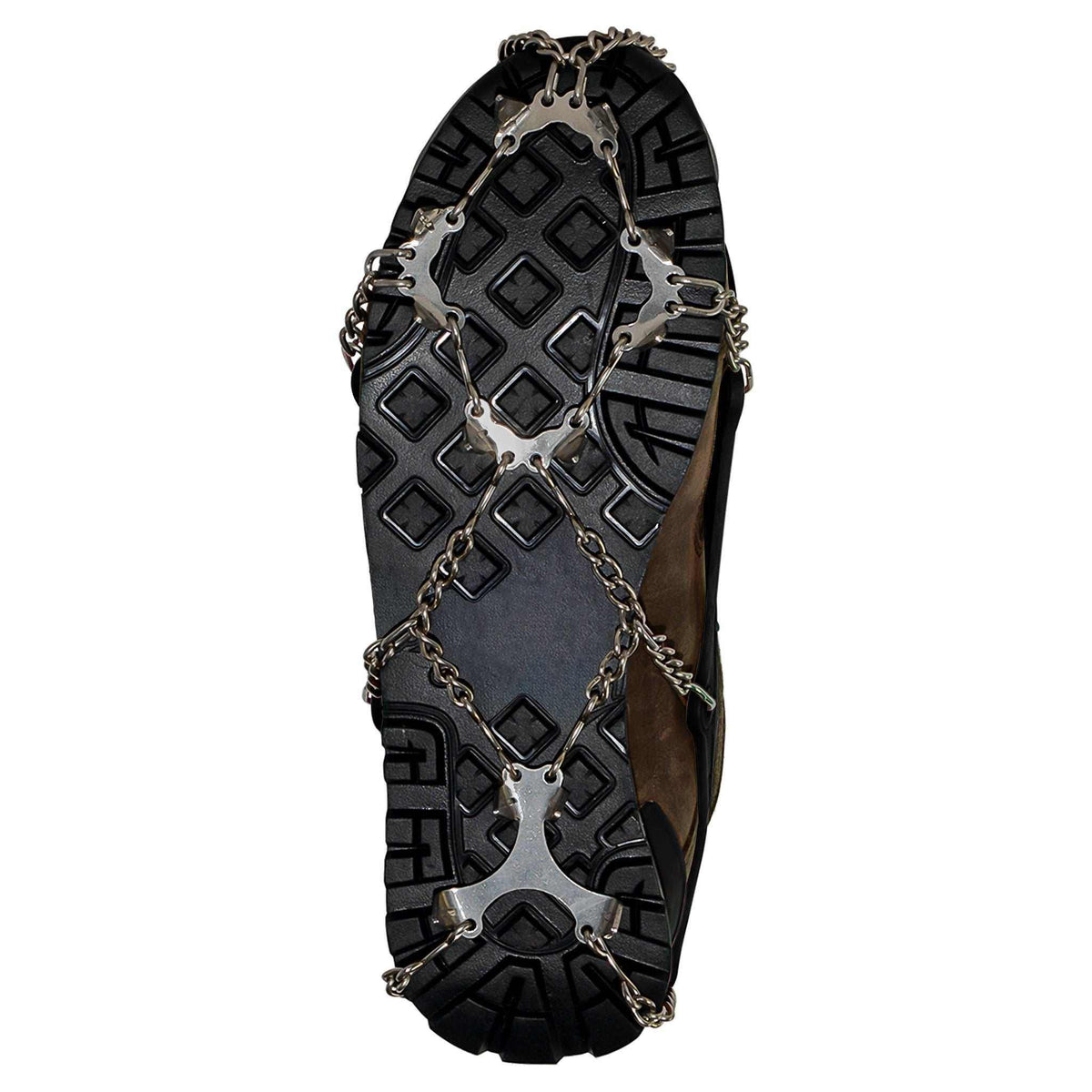
Trail Spikes are built for this. Stainless steel spikes sit on a flex-chain that bends with your foot, and a high-density elastomer harness holds tight in the cold. They pack into a small pouch when the trail clears. $80. If your runs mix steep trails with walking or hiking, our Ice Spikes ($65) are another option, with 15 mm stainless spikes and a harness tested to –40 °C.
Getting the fit right matters more for running than walking. A loose harness slides around at speed. Our guide on how to fit ice cleats on your shoes walks through it.
How to run on ice: form changes that help
Traction helps a lot, but on ice your form matters too. These changes help with or without spikes.
- Shorten your stride and raise your cadence. Smaller, quicker steps keep your foot landing close under your body, where a slip is easier to recover from.
- Land flatter. A hard heel strike out in front of you is the classic way to slide out. Aim for the whole foot coming down under your hips.
- Run by effort, not pace. Your winter pace will be slower. That's normal. Chasing summer splits on ice is how people get hurt.
- Take corners wide and slow. Sharp turns push your foot sideways, which is the direction traction is weakest.
- Be careful on painted lines, metal plates and wooden bridges. These get slick fast, and slip-on studs can slide on smooth metal.
- Keep your arms free. Gloves on, phone in a pocket or belt. Your arms are your balance.
- Plan icy routes. Loops on cleared, well-lit paths beat out-and-backs on a trail you haven't seen since the last thaw.
If you want the basics of moving on ice at walking speed first, our guide to how to walk on ice covers the "penguin walk" and how to fall safely.
Layering, briefly
Traction keeps you upright. Layers keep you out long enough to need it. A common rule of thumb is to dress as if it's about 10 degrees warmer than the thermometer says, because you'll heat up fast once you're moving.
- Base layer that moves sweat away from your skin. Skip cotton.
- Light mid layer on the colder days.
- Wind shell on top. Wind is often the bigger problem than temperature on the Prairies.
- Cover the extremities: hat or headband, gloves or mitts, and a buff for your face in deep cold.
Our Calgary winter running tips go into clothing in more detail.
Running in Canadian winter conditions
Winter in Canada isn't one condition. It's several, often in the same week.
- Chinook country (southern Alberta): A warm spell melts the paths, then everything refreezes overnight into ruts and glare ice. Slip-ons you can swap in and out suit this well.
- The Prairies: Long stretches of deep cold, wind and packed snow. Harness flexibility in the cold matters here.
- Ontario, Quebec and the East: More freeze-thaw cycles and freezing rain, which means more wet ice. Short, quick steps and low-profile studs earn their keep on these mornings.
- The coast: Ice is less frequent, but it catches people out because they're not expecting it. A light pair of slip-ons in a jacket pocket is cheap insurance on frosty mornings.
Not sure what your city needs? See our ice cleats by city guide.
Frequently asked questions
Can you run in ice spikes?
Yes. Running spikes are made for it. Low-profile spikes like Urban Spikes suit icy roads and paths, and flexible chain spikes like Trail Spikes suit packed snow and trail ice. Fit them snugly so they don't shift at speed.
What are the best running cleats for ice?
It depends on the surface. For roads and sidewalks, choose a low-profile slip-on so you can run naturally on bare patches. For trails, choose a flexible stainless steel chain spike with spikes under the toe and heel.
Are screw-in studs better than slip-on spikes?
Neither is better everywhere. Screw-in studs are cheap and light but permanent, so they suit a dedicated winter pair on mostly icy routes. Slip-on spikes work with any shoe and come off when the ice ends, which suits changing conditions.
Can you run on bare pavement with ice spikes?
You can for short stretches, but it feels less natural and wears the spikes faster. Long spikes are noisy and awkward on asphalt. If your route clears up, take them off and carry them.
How should I change my running form on ice?
Shorten your stride, raise your cadence, land with your foot under your hips, take corners wide and slow, and run by effort instead of pace.
Do I need winter running shoes, or can I use my regular shoes?
Many runners use their regular shoes with slip-on traction. A shoe with a slightly firmer, grippier outsole helps, and a water-resistant upper keeps your feet warmer in slush. Studded winter shoes are an option if you'd rather have one dedicated pair.
Sources: Consumer Reports, "Get a Grip With Slip-On Ice Cleats" (2016); Phys.org, "The slipperiness of ice explained" (2018).
Keep running all winter
Winter running in Canada is some of the best running there is: quiet paths, cold air and the sun coming up over the snow. Pick traction that suits your route, shorten your stride and keep going. Shop Urban Spikes for roads, Trail Spikes for trails, or browse the full winter traction collection. Orders over $100 ship free across Canada, and you have 14 days to return them. For the full lineup compared, see our best ice cleats in Canada picks.

Leave a comment
All comments are moderated before being published.
This site is protected by hCaptcha and the hCaptcha Privacy Policy and Terms of Service apply.